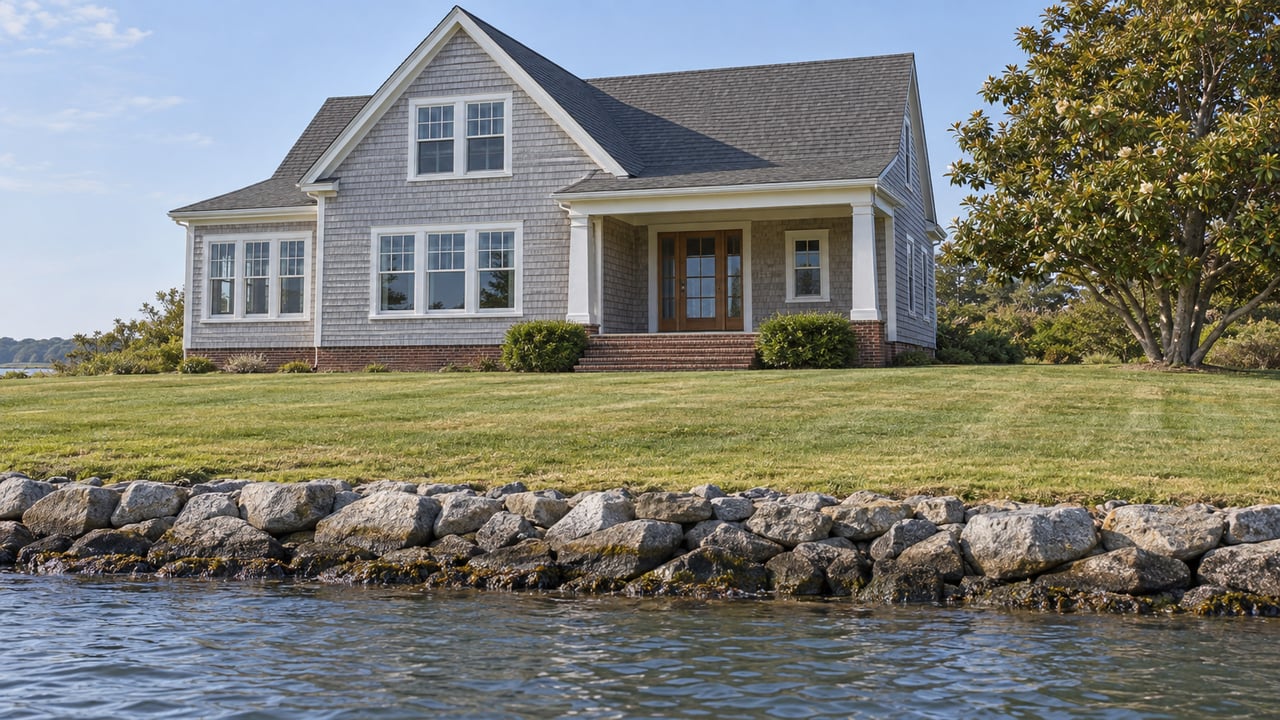
If you picture Reedville boating as a quick walk to the dock, an easy cast-off, and a smooth run toward the Bay, you are already asking the right questions. In this part of Northumberland County, a waterfront home is not just about the view. It is about how well the property supports the way you actually use your boat, week after week. This guide will help you focus on the home features Reedville buyers often prioritize so you can weigh convenience, protection, and long-term practicality with more confidence. Let’s dive in.
Why boating setup matters in Reedville
Reedville is a maritime village shaped by a long working-waterfront history. The town developed around the menhaden industry, and the area still reflects that daily connection to commercial and recreational boating. As the Reedville Historic District nomination explains, this is a place where water access has long been part of everyday life.
That matters when you shop for a home. In Reedville, you are often choosing between a property that looks great on the water and one that truly works as a boating base. For many buyers, the best fit is the property that makes loading, docking, and heading out feel simple rather than stressful.
Protected moorage comes first
One of the most important features Reedville buyers prioritize is protected moorage. Local water conditions make that easy to understand. While the area offers access to the Great Wicomico River, Cockrell Creek, Tangier Island, and the open Chesapeake, exposed shoreline can also mean stronger winds, shallower bars, and rougher conditions.
According to the Virginia Department of Wildlife Resources, the open Chesapeake shoreline near Shell Landing is a high-energy shoreline, while Cockrell Creek offers more protected access and a practical launch point for exploring the area. NOAA also notes that Cockrell Creek is a secure harbor from ice and supports marina services in Reedville, including fuel and repair access. Those details make sheltered creekfront, cove frontage, or a protected dock face especially appealing for buyers who plan to keep a boat in the water regularly.
Nearby marinas reinforce the same pattern. Buzzard Point Marina highlights protected harbor and protected in-water slips, and Reedville Marina information in NOAA’s Coast Pilot points to available boating services nearby. In practical terms, buyers often value a home where the boat is better shielded from wind, wake, and changing conditions.
Dock depth is a must-check item
A dock can look perfect from shore and still be a poor fit for your boat. In Reedville, usable depth at the dock is one of the smartest things to verify early. The local waterways support serious boating, but depth is not uniform from one parcel to the next.
NOAA reports that the Great Wicomico River carries 17 feet or more for 5.5 miles above the entrance, while Cockrell Creek carries 15 feet for about 1.5 miles before gradual shoaling begins. That means a property farther inland may have different depth conditions than a home closer to the main channel. Seasonal siltation can also affect how well a slip or dock performs over time.
For that reason, buyers often prioritize homes where the boat can float comfortably at mean low water, not just on a good day or high tide. If you are considering a waterfront property, it makes sense to check the dock at low tide, ask about any dredging history, and confirm that the depth still works for the boat you own now.
Lift readiness adds flexibility
Many Reedville buyers also look for homes that are lift-ready or at least compatible with future lift installation. A lift can reduce wear, simplify maintenance, and make regular use more convenient, especially if you want to avoid constant trailering.
This priority lines up with the local boating ecosystem. Buzzard Point Marina advertises boat lifts, a 10-ton travel lift, repair support, and protected storage. That is a strong clue that many area boaters value solutions that make storage and maintenance easier.
At a home, lift readiness often comes down to shoreline room, piling layout, and whether the setup appears practical for the size and style of boat you own. Even if a property does not already have a lift, buyers often see value in a dock configuration that gives them options later.
Staging space can make daily use easier
A beautiful waterfront home can still feel inconvenient if moving gear is a hassle. That is why staging, parking, and easy loading matter so much to frequent boaters.
The Virginia Department of Wildlife Resources notes that good ramp design depends on usable land area, turning radius, parking, staging space, and clear traffic flow. At a private residence, the same ideas still apply. A level driveway, room to turn a trailer, clear paths to the dock, and a practical apron area for coolers, bait, rods, and bags can make boating feel much easier.
This is one of those features buyers sometimes overlook on the first showing. If you have to carry everything down a steep slope or work around a cramped parking setup, the routine can get old quickly. Buyers who prioritize actual usability often favor homes that support a smooth start and finish to the day on the water.
Utility details matter more than you think
When you use a boat often, the small things stop feeling small. Water, electricity, lighting, and wash-down convenience can make a big difference in how comfortable a property feels over time.
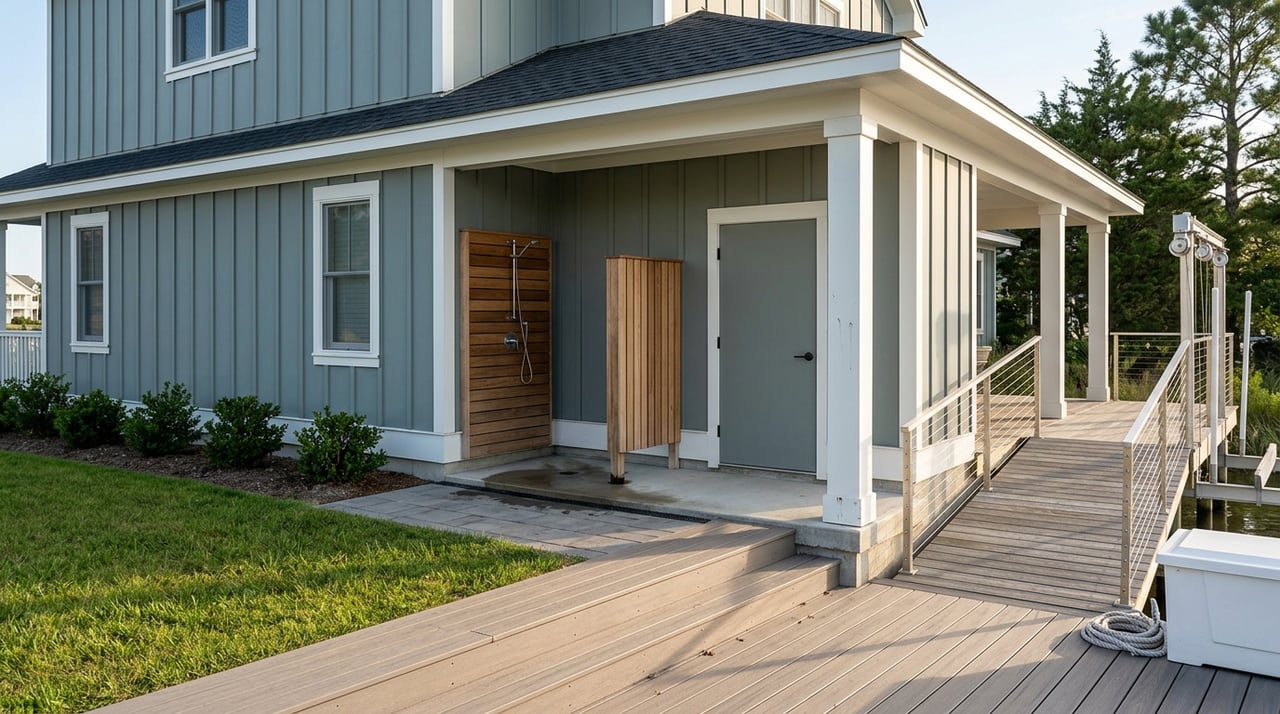
Local marinas help show what active boaters tend to value. Buzzard Point Marina lists amenities such as water, electricity, pumpout, showers, ice, Wi-Fi, and fuel. While a private home does not need to mirror a marina, those features suggest what boaters notice: shore power, hose bibs, hose storage, lighting near the dock, and a rinse-down area that makes cleanup simple.
If your goal is easy weekend use, these utility details can shape your experience as much as the dock itself. A home that supports quick cleanup and easy prep often feels more functional than one with stronger curb appeal but fewer practical boating features.
Storage is part of being boat-friendly
Boating comes with gear, and usually more of it than buyers expect. Lines, fenders, life jackets, tools, crab pots, spare parts, and winterization supplies all need a place to go. That is why secure storage is a major plus in Reedville.
A property with a garage, a shed, lockable dock storage, or a practical mud-entry area can feel much more boat-friendly than one that offers waterfront access but no real room for equipment. The nearby marina environment also points to the importance of storage and maintenance support, with Buzzard Point emphasizing dry storage and service options.
For buyers comparing homes, this often becomes a quality-of-life decision. If you can keep gear organized, dry, and easy to reach, boating tends to feel more enjoyable and less like a project.
Quick channel access saves time
In Reedville, it is not just about being on the water. It is also about how easily you can get from your dock to open cruising water. A property may look attractive on a map but still require a long, shallow, or winding ride before you can really get going.
NOAA notes that Reedville offers gasoline, diesel, some marine supplies, marked channels, and commercial marine traffic connected to local industries. That makes channel access an important practical question. Buyers often prioritize homes that keep them closer to the route out to the Bay or other desired cruising waters without adding a complicated departure every time.
This is especially helpful if you plan to boat often rather than just a few times a season. Less time navigating shallow or narrow stretches usually means a smoother routine and less day-to-day hassle.
Public ramps change the value equation
One interesting part of the Reedville market is that private waterfront homes are not competing against zero boating access. Northumberland County has several public launch options nearby, including Reedville-area access points listed by the Virginia Marine Resources Commission such as Cedar Point Landing, Cockrell Creek Ramp, Glebe Point Landing, and Shell Landing.
That does not make private docks less valuable. It just means buyers often place a premium on features public access cannot fully replace, like a private slip, sheltered moorage, on-site gear storage, and the ability to load and unload at home. In other words, convenience becomes the real differentiator.
Reedville tradeoffs buyers should weigh
Every waterfront property involves some compromise, and Reedville is no exception. Exposure is one of the biggest tradeoffs. The Department of Wildlife Resources notes that open Chesapeake shoreline near Fleeton is high-energy, shallow, and sensitive to easterly winds, while local creek systems provide more shelter.
That means open-Bay frontage may offer bigger views and a dramatic setting, but creekfront and cove-front properties often work better for everyday boating. If your top priority is frequent, low-stress access, protected frontage may be the more practical choice.
Another key tradeoff is depth and siltation. DWR warns that tidal channels shift, siltation can reduce usable depth, and dredging is expensive and complex. NOAA also shows that Cockrell Creek shoals as it runs inland. For buyers, this makes it important to verify the current condition of a dock or slip rather than rely on assumptions.
Finally, Reedville is a working waterfront. DWR advises boaters to watch for large workboats and light airplanes over Cockrell Creek tied to the local menhaden fleet. That activity is part of the town’s identity and appeal, but it can also affect wake, noise, and maneuvering depending on location.
Permit history deserves careful review
If a property has an older dock, lift, bulkhead, ramp, or shoreline improvements, buyers should look closely at the permit history. In tidal waters, new or modified docks, boathouses, moorings, ramps, marinas, shoreline stabilization, and dredging projects often go through the Joint Permit Application process involving the U.S. Army Corps of Engineers, VMRC, DEQ, and sometimes local wetlands boards.
That does not mean a property has a problem. It simply means you should confirm what was approved, what can be repaired, and whether expansion or modification is likely to be possible. This is an area where thoughtful guidance can save you time and expensive surprises.
What to prioritize on a Reedville showing
If you are touring boat-friendly homes in Reedville, keep your focus on the features that support real use, not just good listing photos.
A smart showing checklist includes:
- Protected moorage or sheltered dock placement
- Dock depth that works at low tide
- Lift compatibility or room for future installation
- Easy parking, trailer turning, and dock access
- Water, power, lighting, and rinse-down setup
- Secure storage for boating gear and supplies
- Efficient route to deeper water and marked channels
- Permit history for docks, lifts, bulkheads, or dredging
For many buyers, the best Reedville property is the one that balances boating convenience with manageable upkeep. That is often where local knowledge matters most.
If you want help sorting through waterfront homes, dock questions, and the practical differences between creekfront and more exposed shoreline, working with an advisor who understands both homes and boating infrastructure can make the search much clearer. Beth Groner brings waterfront perspective and construction knowledge to help you evaluate properties with confidence.
FAQs
What boat-friendly home features matter most in Reedville?
- Buyers often prioritize protected moorage, workable dock depth, lift readiness, easy loading space, utility access, secure storage, and a simple route to deeper water.
Why do Reedville buyers often prefer creekfront or cove-front homes?
- Protected creekfront or cove-front homes can offer better shelter from wind, wake, and rougher open-Chesapeake conditions, which may make everyday boating easier.
How should buyers evaluate dock depth at a Reedville waterfront home?
- You should check whether the boat can float comfortably at low tide, ask about seasonal shoaling or dredging, and verify that current depth works for your boat type.
Do public ramps near Reedville reduce the value of private docks?
- Public ramps add access options, but private docks still offer convenience, on-site loading, sheltered moorage, and storage that many active boaters strongly value.
Why should buyers review permit history for Reedville docks and shoreline improvements?
- Permit history helps you confirm whether existing docks, lifts, bulkheads, ramps, or dredging work were approved and whether future repairs or changes may be possible.