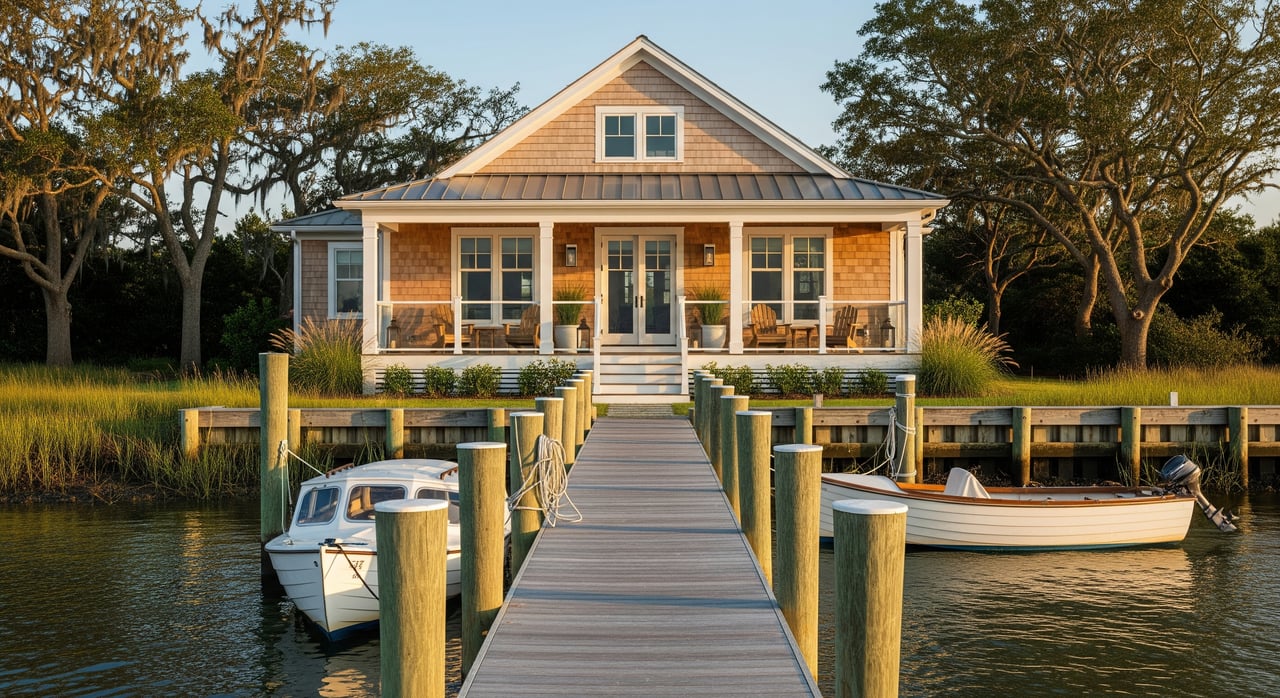
Picture this: coffee on the porch, a light breeze off the Bay, and your boat ready to go. If you are thinking about a waterfront home in Deltaville, you are not just buying a house. You are buying water access, dock capability, and a set of coastal rules that work differently than inland homes. In this guide, you will learn how to check channel access, confirm mean low water depths, evaluate docks and lifts, understand permits, and use a simple checklist before you tour. Let’s dive in.
How Deltaville buying differs
Deltaville sits where creeks and rivers meet the lower Chesapeake Bay. That means water access and navigability vary from property to property. Some homes have deep, reliable access. Others sit on shallow creeks that may not float your boat at low tide.
You also need to plan for coastal factors. Flood risk, storm surge, and shoreline erosion are typically higher than inland. Elevation certificates, flood insurance, and shoreline condition deserve early attention. Septic and well systems near the shore can be older or stressed, so inspections are essential.
Waterfront maintenance differs too. Docks, bulkheads, lifts, and erosion control bring ongoing costs beyond standard home upkeep. Permits for anything waterward of the mean low water line follow state and sometimes federal rules, with local county steps layered in.
Channel access and depths
Confirm true channel access
Channel access is not just about having waterfront. Ask if the property sits on a marked and maintained navigation channel or on a smaller, unaligned creek. Look for answers about turning room and whether there are seasonal shoaling issues. Homes on maintained channels usually offer more reliable access for larger boats.
You will want to know if there is a turning basin or only a narrow run. Ask specifically about any bridge clearances if you have a sailboat or tall superstructure. Consider wake and commercial traffic near main channels that can influence dock design and daily comfort.
Measure MLW depths
Never rely on the phrase “deep water” alone. Ask the seller or listing agent for depth measurements at mean low water alongside the dock and at the channel entrance. Then confirm with a professional.
Hire a marine contractor or hydrographic surveyor to measure depths at mean low water for the boat you plan to use. Depths vary widely in the area. Small creeks can have less than 3 feet at low tide, while main channels and some marinas can run 6 to 12 feet or more. Only a site measurement will tell you what is safe for your vessel.
Account for other access factors
- Bridge clearances can limit mast height or radar arches.
- Channel width and turning radius matter for docking and departing.
- Seasonal shoaling may require periodic dredging in some waterways.
- Wake and traffic patterns can affect mooring and dock wear over time.
Docks and lift options
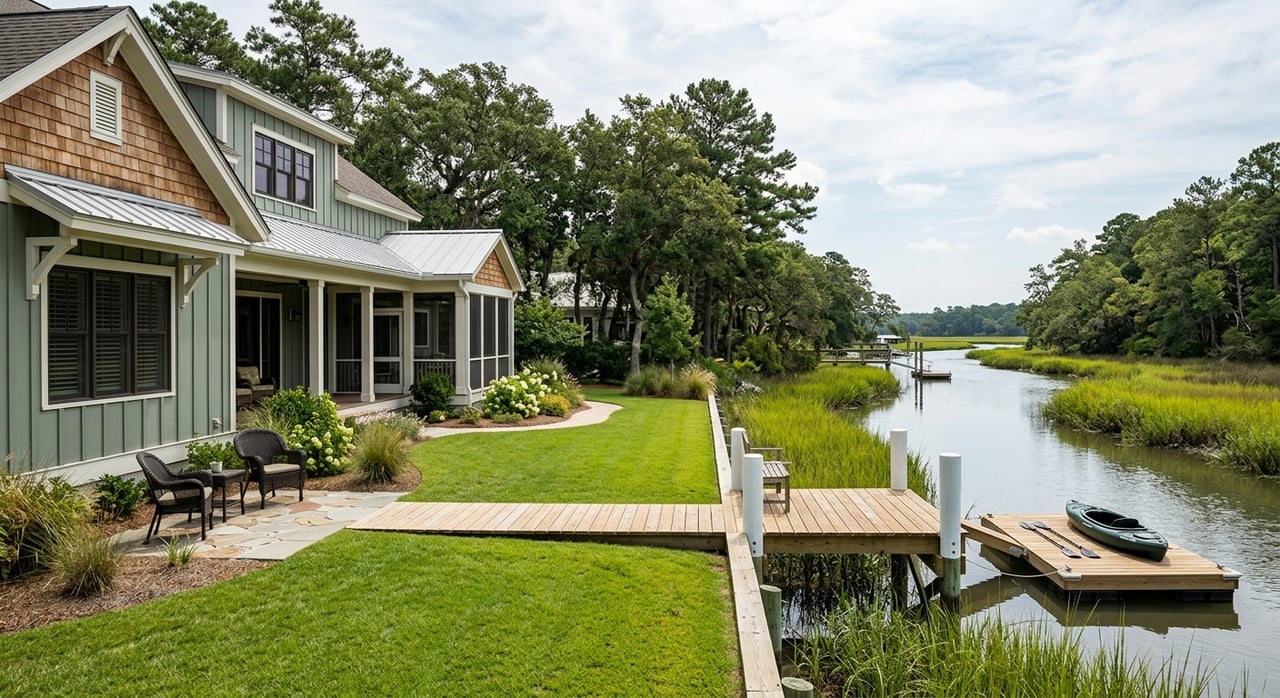
Common dock types
- Fixed pile piers and finger piers. A strong choice where depths are consistent and wave action is moderate.
- Floating docks. Helpful where tidal range or depth varies, or where bottom conditions make piles difficult.
- Combination systems. A fixed walkway with a floating finger to adapt to tides and drafts.
Boat lift types
- Cradle lifts. Common for powerboats. They need stable access and enough depth under the lift to float on and off at mean low water.
- Vertical or hydraulic lifts. Useful for heavier boats. Often require deeper water under the lift.
- Pontoon or floating lifts. Good for lower draft boats where a floating platform is practical.
- PWC lifts. Compact and cost effective for jet skis.
Select the right system
Match the lift capacity to your boat’s length, beam, and weight. Draft at mean low water will determine what you can raise and launch safely. Tidal range, wind fetch, and wave exposure influence whether a fixed or floating solution will last. Some insurance carriers have specific requirements for lift tie‑downs and storm season securement, so ask early.
For materials, pressure‑treated timber, composite decking, aluminum frames, and galvanized hardware are common. Consider corrosion resistance based on whether conditions are salt or brackish.
Plan for maintenance and lifespan
Wood piles and decking usually need more upkeep than aluminum or composite. Lift motors, cables, and hydraulics require regular service and sometimes winterizing. Rebuilds or major repairs to docks and lifts can be among the largest unexpected expenses in waterfront ownership. If a lift is included in the sale, request the manufacturer specs, capacity, age, service records, and any permits or inspections.
Permitting basics
Who regulates what
- Virginia Marine Resources Commission regulates structures waterward of the mean low water line and manages leases of state‑owned submerged lands. Piers, bulkheads, lifts, and many shoreline measures need VMRC authorization.
- Virginia Department of Environmental Quality and local agencies review coastal and water quality issues, including living shorelines and stormwater. Septic considerations may also apply.
- Middlesex County handles zoning, local building permits, septic permits, and county shoreline requirements.
- The U.S. Army Corps of Engineers may be involved for work in navigable waters or wetlands in specific cases.
Approvals and timelines
Plan a preliminary consultation with VMRC and the county before you buy or build. Permits can be simple letters of permission or general permits for small projects, or they can require individual permits with public notice and environmental review. Timelines range from weeks for simple cases to months for complex projects. Seasonal review windows can extend timing.
What to verify at a listing
- Confirm whether the existing dock and lift have VMRC approval.
- Ask if there is a submerged land lease where required.
- Check if any past shoreline work, like bulkheads, was permitted.
- Review floodplain requirements, including elevation certificates for new or altered structures.
- Look for HOA or covenant rules that affect placement, shared access, or mooring.
- Ask whether living shoreline options have been considered where feasible.
Cost expectations
Permit fees are usually modest, but surveys, engineering, and mitigation can add cost. Dock construction or rebuild budgets vary widely, from the low tens of thousands to well over six figures depending on size, materials, lift type, and site conditions. Engage a local marine contractor early to scope realistic costs.
Touring checklist for buyers
Request these documents
- Recent site survey showing mean low water, bulkhead, pier footprint, property lines, and easements.
- Dock and lift documentation, including age, dimensions, lift capacity, service records, and permits.
- Septic inspection report or pump‑out records, plus well water test results if applicable.
- Flood elevation certificate if available, FEMA flood zone for the lot, and any recent flood insurance estimates.
- County permits and VMRC authorizations for existing structures.
On‑site checks during a tour
- See the dock at or near low tide if possible, or check tide tables to approximate mean low water.
- Inspect piles, deck boards, fasteners, and lift components for rot or corrosion.
- Study the shoreline slope and any erosion signs. Photograph areas of concern.
- Observe the nearest channel entrance, turning room, and visible shoaling. Note any marshes, submerged vegetation, or oyster bars that may indicate shallow water.
- Watch boat traffic and wakes at different times of day if you can.
Line up the right pros
- Licensed marine contractor or dock inspector for condition and depth checks.
- Hydrographic surveyor to confirm mean low water depths and boundaries.
- Licensed septic inspector and well tester.
- Floodplain specialist or surveyor for elevations and risk.
- Local permit expeditor or coastal attorney if title or submerged land lease issues arise.
Insurance and budgeting
- Get quotes for flood insurance through NFIP and private markets, and confirm the flood zone.
- Ask about homeowner’s insurance, wind, storm, and whether dock and lift coverage is available.
- Build a maintenance reserve for dock and lift upkeep and future replacement.
Deltaville depth reality check
Depths in and around Deltaville vary creek by creek. Small residential creeks often go shallow at mean low water. Main channels and some marinas can have the depth you need for larger boats. Because shoaling changes over time, the most reliable approach is a current on‑site MLW measurement and a review of the nearest marked channel.
If you plan to bring a specific boat, use its draft as your baseline. Confirm that the water alongside the dock, along the approach route, and at the channel mouth meets that draft with a comfortable safety margin at mean low water. If a fixed bridge sits between the dock and open water, check the posted clearance against your mast or tower height.
Next steps for buyers
- Ask the listing agent for the survey, dock and lift documentation, and any VMRC and county permit records.
- Review tide data for the address and identify the nearest marked channel. Note charted depths, then verify on site.
- Order a septic inspection and request elevation and flood information early in due diligence.
- If you are serious, schedule a marine contractor or surveyor to confirm MLW depths and evaluate the dock and lift before waiving inspections.
A little preparation up front will save you time and money. You will quickly filter homes that fit your boat, your risk tolerance, and your timeline for any improvements.
Ready to evaluate a Deltaville property with a knowledgeable waterfront advisor by your side? Connect with Beth Groner to schedule a personalized market consultation and move forward with confidence.
FAQs
What is “channel access” when buying in Deltaville?
- It refers to whether your property connects to a marked and maintained navigation channel or to a shallow, unaligned creek, which affects boat size, turning room, and reliability at low tide.
How do I confirm mean low water depth at a dock?
- Ask for recent MLW depth measurements at the dock and channel entrance, then hire a marine contractor or hydrographic surveyor to verify for your specific boat.
Do I need permits to add or modify a dock or lift?
- Most work waterward of the mean low water line requires Virginia Marine Resources Commission authorization, with county and sometimes federal reviews depending on scope.
What flood and shoreline items should I check first?
- Request the elevation certificate and flood zone, review flood insurance options, and assess shoreline condition for erosion or prior permitted work.
Will my specific boat fit at a Deltaville home?
- Only current MLW depth measurements along the approach and at the dock, plus checks for bridge clearance and turning room, can answer that reliably.
What ongoing costs are different for waterfront owners?
- Budget for dock and lift maintenance, possible shoreline stabilization, inspections for septic and wells near the shore, and potentially higher flood and wind insurance premiums.